
An honest starting point
Not every spill needs a professional. A restoration company that says otherwise is selling. What matters is whether the water was clean, how much there was, how long it sat and what it soaked into.
The four-question test
- Was the water clean? Supply lines, a sink overflow of tap water and rain through an open window are clean. Dishwasher discharge, a toilet overflow past the trap, sewage and outdoor flood water are not.
- Was it caught in a day or less?
- Is the wet area small? Think one part of one room.
- Did it stay on the surface? Water on tile is different from water that ran under flooring or into a wall.
Four yes answers means you can probably handle it. Any no means get it checked.
| Situation | Do it yourself? | Why |
|---|---|---|
| Overflowed sink on a tile floor, mopped up at once | Yes | Clean, small, surface only |
| Small spill on carpet over a wood subfloor | Yes, with care | Lift the carpet and dry the pad |
| A few square feet of wet drywall from a clean splash | Yes | Dries quickly with air movement |
| Whole room of wet carpet | No | The pad will not dry under the carpet |
| Water under laminate or vinyl plank | No | It is trapped against the subfloor |
| Water inside a wall or ceiling | No | Hidden cavities need measurement |
| Anything involving sewage or flood water | No | Contaminated water needs protective handling |
| Water that sat more than two days | No | Treated as contaminated, mold likely |
How to dry a small leak properly
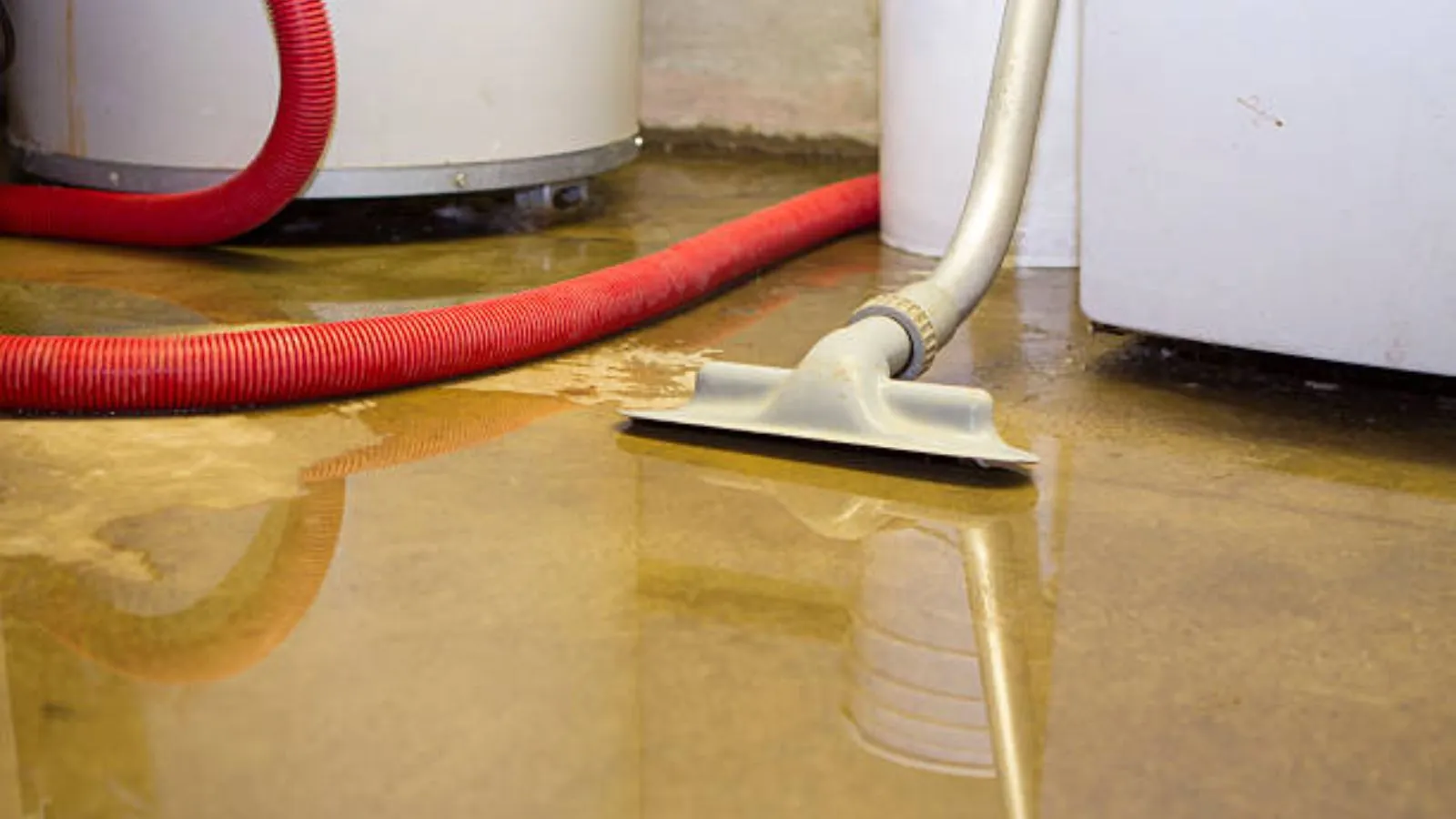
Remove the water. Towels, a mop or a wet vacuum. Get as much as you can as liquid.
Move air. Set box fans to blow across the wet surface, not at the ceiling.
Remove moisture from the air. Run a dehumidifier in the room with doors and windows closed. In humid weather, open windows make things worse.
Open things up. Take off the baseboard if the bottom of the wall got wet. Open cabinet doors. Lift the edge of the carpet and prop it so air reaches the pad.
Keep going. Run the fans and dehumidifier for at least two or three days after everything feels dry. Feeling dry and being dry are different.
Check. An inexpensive pin moisture meter from a hardware store lets you compare the wet spot with a dry wall nearby. When they match, you are done.
Safety limits
- Do not use electrical equipment while standing on a wet floor
- Do not enter a room with water near outlets until the breaker is off
- Do not stand under a ceiling that sags
- Do not handle sewage or flood water without protection
- Do not run fans on visible mold
The signs you need help
Call someone if you see any of these after a few days of drying: a musty smell, a stain that keeps growing, flooring that cups or lifts, baseboards that swell, paint that bubbles, or a meter reading that will not come down.
Also call if the water went somewhere you cannot see. The most expensive jobs we see began as a "small" leak that ran under a kitchen floor for a week.
What professionals have that you do not
Three things. Extraction equipment that pulls water out of pad and subfloor. LGR dehumidifiers that keep working at low humidity, where a household unit stalls. And instruments, including thermal cameras and calibrated meters, with the experience to read them. That equipment is used on jobs with a technician monitoring it. We do not rent it out.
Our structural drying page explains the process, and wet walls are covered on the wall and drywall page.
Gaithersburg-specific considerations
Weather. Central Maryland summers are humid. If you are drying a leak in July or August, keep the house closed and the air conditioning on. Outdoor air will add moisture.
Basements. Many Gaithersburg homes have finished lower levels with carpet over concrete. That combination is the hardest for a homeowner to dry, because pad on a slab holds water for a very long time.
Storm water. Some Gaithersburg blocks get runoff across lawns in a downpour, which the city confirmed when it studied its headwater drains in 2024. Water that entered from outside during a storm is contaminated, even if it looks clear, and is not a do-it-yourself job.
Rebuilding. If drying turns into repair, check the city's permit page first. Refinishing a basement is one of the jobs on it. Small like-for-like repairs are usually simpler, but ask the city if in doubt.
If you rent
Report every leak to your landlord, even one you dried yourself. Hidden moisture that turns into mold later is much easier to resolve if there is a record. That applies throughout the area, from apartments in the city to townhouses in Germantown and Clarksburg.
Questions
Can I dry a wet basement carpet myself in Gaithersburg?
A small corner, yes, if the water was clean and you lift the carpet to dry the pad. A whole room on a concrete slab usually needs extraction and pad replacement.
How long should I run fans after a leak?
At least two to three days past the point where it feels dry, with a dehumidifier running.
Is a household dehumidifier good enough?
For a small area, yes. For a room or more, it cannot keep up.
Will insurance pay if I dry it myself?
Ask your insurer. Keep photos either way.