
A wet commercial building is a business interruption first
Commercial water damage restoration is extraction, drying and repair in buildings where the loss is measured in closed hours as well as wet materials. Offices, shops, restaurants and multi-unit residential buildings in Gaithersburg, MD all share that pressure. If water is on your floor now, it is an emergency, and the line is open 24/7 so a plan can start before your staff arrives.
Commercial water emergency: first actions for a manager
- Shut the water at the riser or main valve and note the time
- Call building engineering or the property manager, since they hold the valve and panel keys
- Cut power to affected areas only from a dry electrical room
- Move stock, files and equipment off the floor
- Notify tenants above and below in a multi-story building
- Photograph everything before cleanup starts and keep a written timeline
How commercial losses differ from a house
| Factor | Home | Commercial building |
|---|---|---|
| Size | A few rooms | Thousands of square feet, often several floors |
| Sources | Supply lines and appliances | Sprinkler heads, risers, rooftop units, restrooms |
| Materials | Drywall, carpet, wood | Ceiling tile, carpet tile, raised floors, cove base, block walls |
| Stakeholders | Owner and insurer | Owner, manager, tenants, insurer, sometimes a lender |
| Priority | Dry and repair | Reopen safely, then dry and repair |
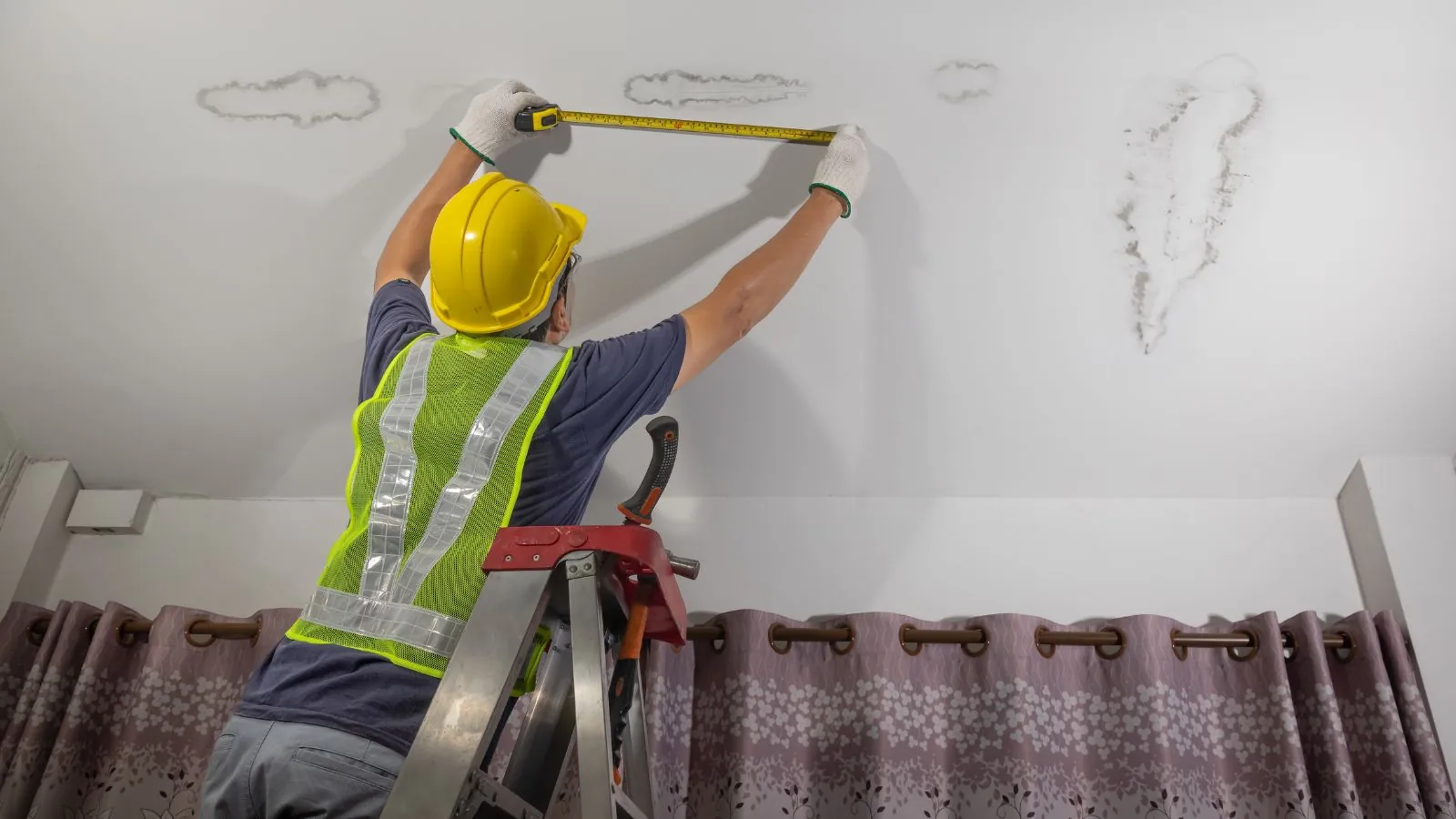
Sprinkler discharge is its own category. A single head releases a large volume in minutes, and the water is often dark from sitting in the pipes. Rooftop HVAC condensate and roof drains are the slow sources, showing up as stained ceiling tiles.
The local commercial picture
Gaithersburg's employment base leans on science and offices along I-270. The National Institute of Standards and Technology has its campus here, and life science companies occupy buildings near Quince Orchard Road and Great Seneca Highway. Retail lines MD 355, known locally as Frederick Avenue, and mixed-use centers such as Downtown Crown and Kentlands Market Square put shops under apartments.
That mix matters for water damage. A leak in a mixed-use building crosses from a residential unit into a shop ceiling. A lab or clinic has equipment that cannot get wet and rooms that cannot be opened freely. Tell us what your space contains on the first call.
How a commercial job is run
- TriageStop the source, make the area safe and protect critical equipment and records.
- Extract and mapRemove standing water, then map moisture across every affected floor.
- Phase the dryingDry occupied or revenue areas first where possible, with containment so other areas stay open.
- Document and repairKeep daily logs for the insurer and schedule repairs around operating hours.
Extraction uses the methods on our water extraction page at a larger scale, and the drying phase follows the same measurement approach described under structural drying.
Multi-unit buildings and condo associations
Water in a condo or apartment building raises a question before any drying starts: who is responsible for what? Association documents usually divide the building into common elements and unit interiors. We do not interpret those documents. We do keep our scope separated by unit so the association, the unit owners and their insurers can each see their part.
Tenants should tell their landlord or manager immediately. Owners should check the association's rules on reporting leaks.
Large and unusual losses
Some losses do not fit a pattern: a vacant property where a line ran for days, a fuel station with a flooded sales floor, a city shutting off service after a very large leak. These start with a walk-through and a written scope. Vacant buildings usually need a mold check as part of that scope, and where growth is found the work follows our mold remediation approach.
Storm-related losses, such as wind damage to a roof membrane, are covered on the storm water damage page.
Permits
Commercial rebuild work inside the city generally goes through the City of Gaithersburg's permitting office. Drying does not need a permit. Reconstruction might, so ask the city before walls are rebuilt.
Cost factors
- Affected square footage and number of floors
- Water source and category
- After-hours work to avoid closing
- Containment and equipment needed to keep areas open
- Specialty materials such as raised floors or ceiling systems
Insurance note
Commercial property policies vary widely, and business interruption coverage is a separate question from the building damage. Ask your broker or insurer. Our daily logs, photos and moisture maps are prepared with that file in mind.
Do you handle commercial water damage emergencies at night or on weekends in Gaithersburg?
Yes. Many commercial losses are found by cleaning crews or alarm calls overnight, and the line is answered 24/7.
Can we stay open during drying?
Often yes, in part. Containment and phased work keep unaffected areas running. Safety decides, not convenience.
Do you work with property managers and associations?
Yes. Scopes can be split by unit or tenant space so each party sees its share.
Do you serve commercial properties in Germantown and Clarksburg?
Yes. We cover Germantown, Clarksburg, Derwood, Boyds and Damascus.