
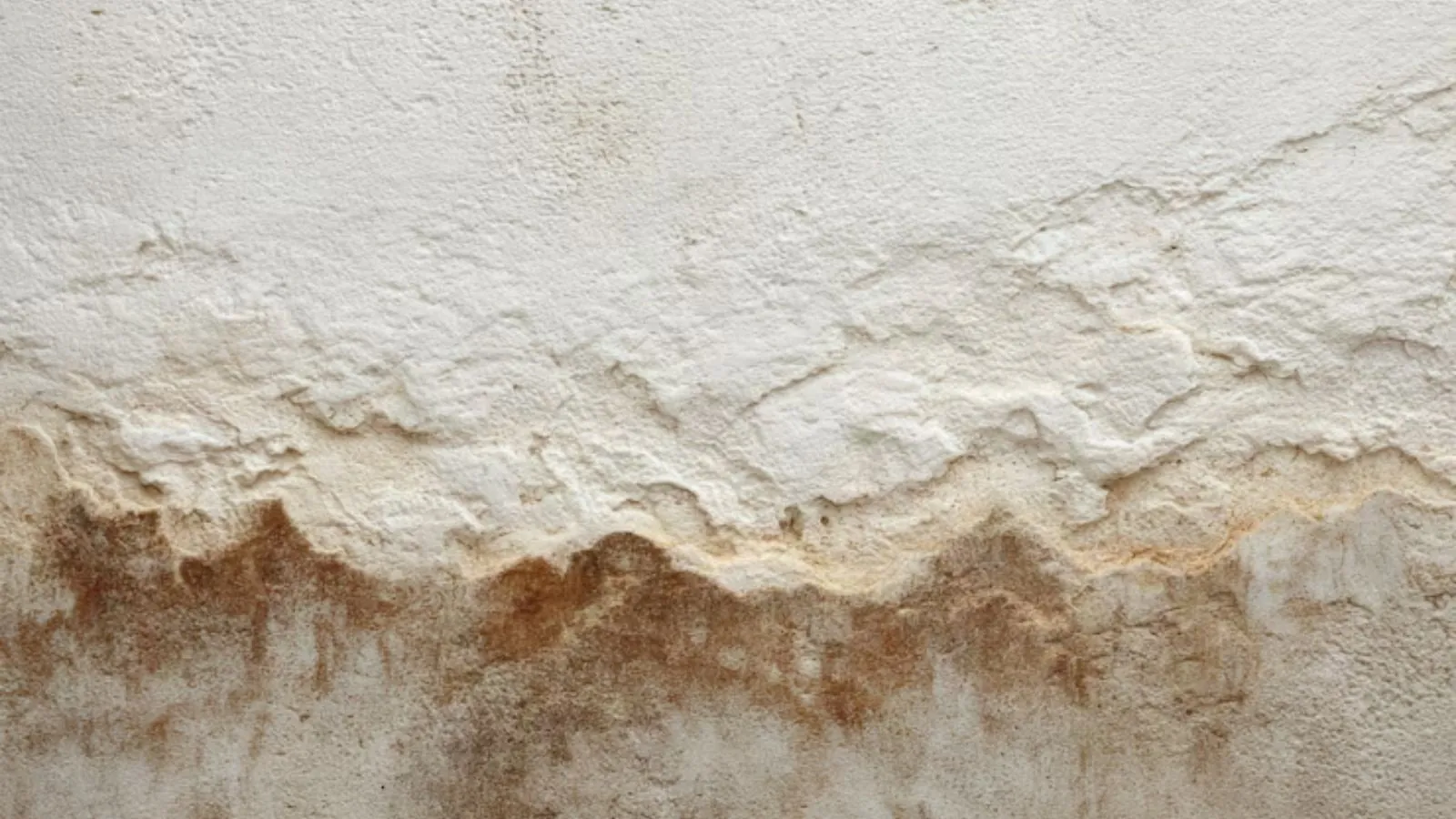
Drywall wicks water like a paper towel
Wall and drywall water damage repair covers the drying of wall cavities and the replacement of drywall, baseboards and insulation that water has ruined. Drywall is gypsum pressed between two sheets of paper. Set its bottom edge in water and the moisture climbs, sometimes a foot or more above the water line. In Gaithersburg, MD homes we find wet walls after supply line leaks, roof and siding leaks, and any event that puts water on a floor.
Signs a wall is wet inside
- Baseboards that have swollen, separated or pulled away from the wall
- Paint that bubbles, blisters or peels
- A stain with a brown edge that grows
- Drywall that feels soft or gives when pressed
- A hole or crumbling spot forming where the wall was saturated
- A musty smell near the floor
- Nail or screw heads showing rust through the paint
Garage walls deserve a mention. Drywall in an attached garage often gets wet from a water heater, a hose bib line or snow melt, and it tends to be ignored until it crumbles.
Where wall water comes from
Inside sources include a pipe in the wall, a tub or shower valve, and overflow from a fixture. A master bathroom wall that backs onto a bedroom is a frequent one.
Outside sources include a roof leak running down inside the wall, failed flashing around a window, and siding that lets wind-driven rain behind it. A siding leak can soak a kitchen or bedroom wall with no plumbing anywhere near it.
Floor-level sources are everything else. Any standing water wets the bottom of every wall it touches.
Dry in place or cut out?
| Condition | Decision | Reason |
|---|---|---|
| Clean water, drywall still firm, wet less than about two days | Dry in place | Drywall regains strength when dried promptly |
| Drywall soft, sagging or crumbling | Remove | It will not recover |
| Insulation in the cavity is wet | Open the wall | Wet insulation does not dry inside a closed cavity |
| Gray or contaminated water | Remove what it touched | Porous material cannot be cleaned |
| Mold visible or wet for many days | Remove under containment | See mold remediation |
When drywall is removed, it is usually cut in a straight line a foot or two above the wet reading. That is called a flood cut. It leaves a clean edge for new drywall and opens the cavity for drying.
How a wall cavity is dried
Baseboards come off first. Small holes are drilled near the floor, hidden later by the baseboard, and air movers or a cavity drying system push dry air into each stud bay. A dehumidifier pulls the moisture out of the room air.
A technician checks the wall with a meter each day, at the same marked points, until the drywall and the wood studs match a dry wall elsewhere in the house. This is the process described on our structural drying page.
Exterior walls and walls between units need more care. They contain insulation or sound batts, and sometimes two layers of drywall. Those usually have to be opened.
Plaster is different
Some older homes in the city have plaster walls instead of drywall. Plaster tolerates water better than drywall and often dries without damage, but it dries slowly and the wood lath behind it holds moisture. It needs longer monitoring, not faster demolition.
The repair
After the wall is dry, new drywall is hung, taped and finished. Texture is matched where the wall has one. Baseboards are replaced, usually with new material because swollen MDF trim does not recover. Then primer and paint.
Paint matching is the visible part. A patch painted alone often flashes, meaning it reflects light differently. Painting the full wall corner to corner avoids that.
If the water also came through from above, the overhead part of the job is on our ceiling water damage page. Kitchen walls behind cabinets are covered under kitchen water damage.
Maryland contractor licensing
Maryland requires contractors who perform home improvement work to hold a Maryland Home Improvement Commission license. Drywall replacement after a leak is that kind of work. It is reasonable to ask any company doing your repairs about its MHIC license.
Cost factors
- Linear feet of wall affected and the height of the cut
- Whether insulation is replaced
- Texture and paint matching
- Baseboard and trim replacement
- Drying days before repair can start
Insurance note
Sudden leaks are often covered. Long-term seepage, such as a window that leaked for years, often is not. Check your policy and ask your insurer.
Is a wet wall an emergency?
If water is still running, yes. Shut it off and call. If the leak has stopped, it is not dangerous, but drying in the first day or two decides whether the drywall can be saved.
Can I just paint over a water stain?
Only after the wall is confirmed dry and the source is fixed. Then a stain-blocking primer is needed, or the stain bleeds through.
How high does drywall need to be cut?
Above the highest wet reading, usually in a level line so the new sheet fits cleanly.
Do you repair walls in Boyds and Clarksburg?
Yes. We cover Boyds, Clarksburg, Germantown, Derwood and Damascus.