
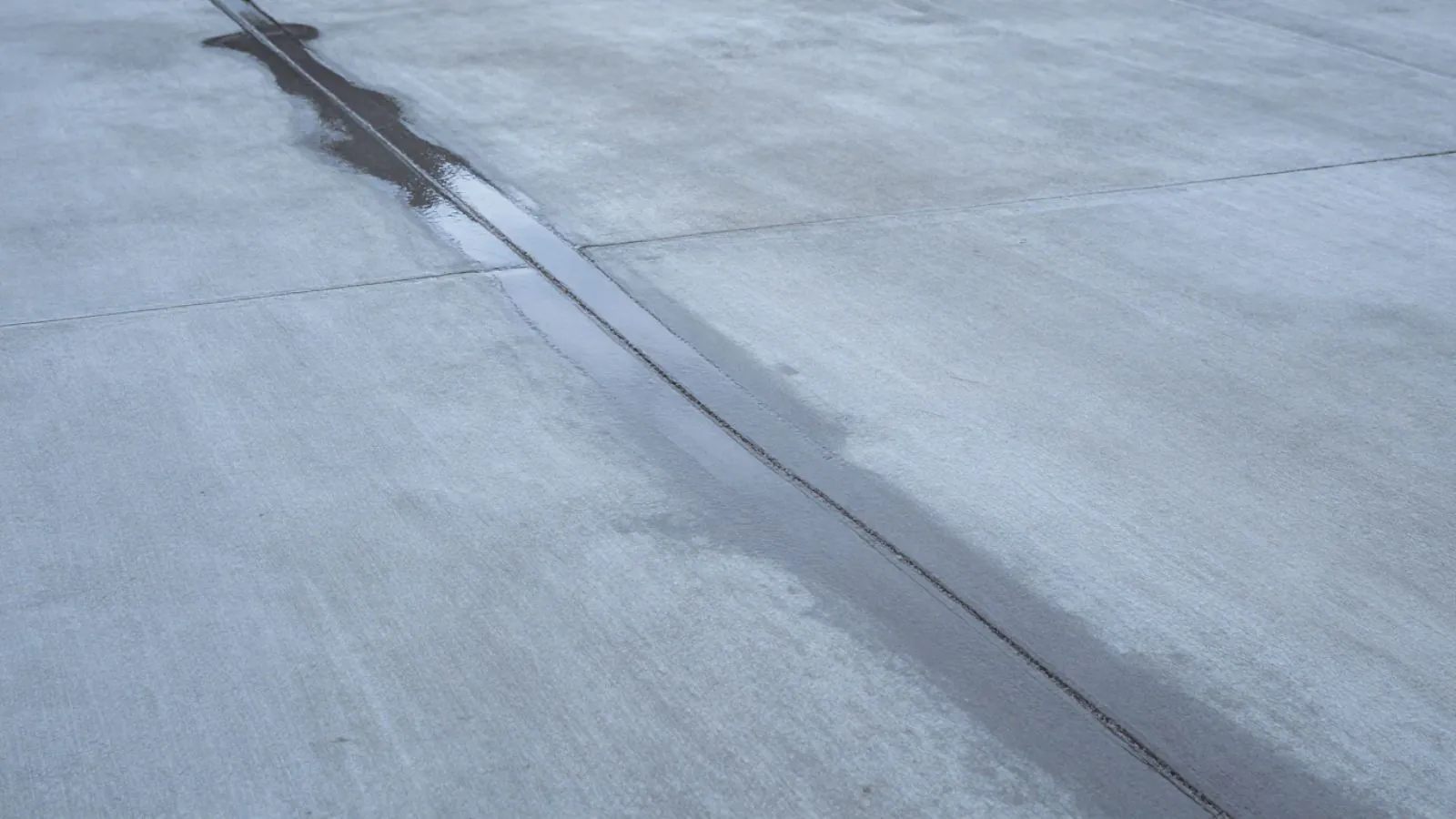
Why is my floor wet when nothing above it is leaking?
That question is how most people meet a slab leak. A carpet edge is damp, a floor tile feels warm, or water shows along the bottom of a wall, and no fixture nearby explains it. The cause can be a water line running under the concrete floor. Slab leak water damage cleanup is the drying and repair of what that hidden leak soaks.
If water is actively rising through a floor in your Gaithersburg, MD home, shut the main valve and treat it as an emergency. The line is open 24/7.
Slab leak emergency: confirm it and stop it
- Turn off every tap and appliance that uses water.
- Look at the water meter. If the dial still moves, a pressurized line is leaking somewhere.
- Close the main shutoff to stop the flow.
- Keep cords and power strips off the wet floor.
- Call a plumber for leak location and call us for the water damage.
How common is this in Gaithersburg?
We will be straight about it. Many homes here have basements, and in those homes supply lines usually run overhead in the basement ceiling, not under concrete. We have no primary-source figure for how many local homes are slab-on-grade, so we will not claim slab leaks are common in this city.
They do occur in three situations: homes and townhouses built on a slab, basement floors with a line or a bathroom rough-in beneath them, and commercial spaces with plumbing under the floor. When one happens, the mechanics are the same anywhere.
Signs of a leak under concrete
- A warm strip on a hard floor, which suggests a hot water line
- Carpet that is damp from underneath with no spill above
- Hardwood or laminate that lifts or cups in one area
- The sound of running water when everything is off
- A water bill that jumps without explanation
- Dampness along the base of interior walls
What the water damages
Concrete is porous. Water from a leaking line saturates the slab and moves outward, so the wet area keeps growing while the leak continues.
Flooring takes the first hit. Carpet pad soaks from below, glue-down wood releases, and floating floors trap water against the slab. Then the bottom plates of the walls wick moisture up into drywall. Left long enough, the base of each wall grows mold behind the baseboard.
Sequence matters: pipe first, drying second
A plumber locates the leak with acoustic or pressure equipment, then either opens the slab at that spot or reroutes the line through walls and ceilings. Rerouting avoids breaking concrete and is often the better choice in a finished room.
Drying starts once the water is off. Standing water is extracted, wet pad and ruined flooring are removed, and baseboards come off so wall cavities can vent. Concrete gives up moisture slowly, so the dehumidifiers described on our structural drying page may run longer than on a wood-framed floor.
New flooring should not go down until the slab tests dry. Installing over a damp slab is the most common reason replacement floors fail.
Repair options
| Affected material | Option | Trade-off |
|---|---|---|
| Carpet | Replace pad, dry and reinstall carpet | Works when the water was clean and the leak was recent |
| Glue-down or floating wood | Remove and replace after the slab is dry | Waiting for the slab adds time |
| Tile | Often stays, grout and edges are checked | Tiles over the repair trench are replaced |
| Wall bases | Cut drywall above the wet line and replace | See our wall and drywall page |
If the wet room is below grade, our basement water damage page covers the rest of that space.
Cost factors
- How long the line leaked before it was found
- Type and area of flooring lost
- Whether the slab is opened or the line rerouted
- Linear feet of wall base affected
- Extra drying days for concrete
Insurance note
Policies often treat the resulting water damage and the pipe repair differently, and a leak that went on for a long time may be viewed as gradual. Check your policy and ask your insurer what applies.
Do you handle slab leak emergencies at night or on weekends in Gaithersburg?
Yes. If water is coming up through a floor, shut the main and call at any hour. Extraction can begin before the plumber finishes locating the line.
Do you find and fix the leaking pipe?
No. A plumber locates and repairs the line. We remove the water, dry the slab and walls, and handle the repairs to flooring and drywall.
How long does a slab take to dry?
Longer than wood framing, often a week or more depending on how saturated it is. Readings decide, not the calendar.
Do you cover slab leak damage in Derwood?
Yes. Derwood is in the service area with Germantown, Clarksburg, Boyds and Damascus.