
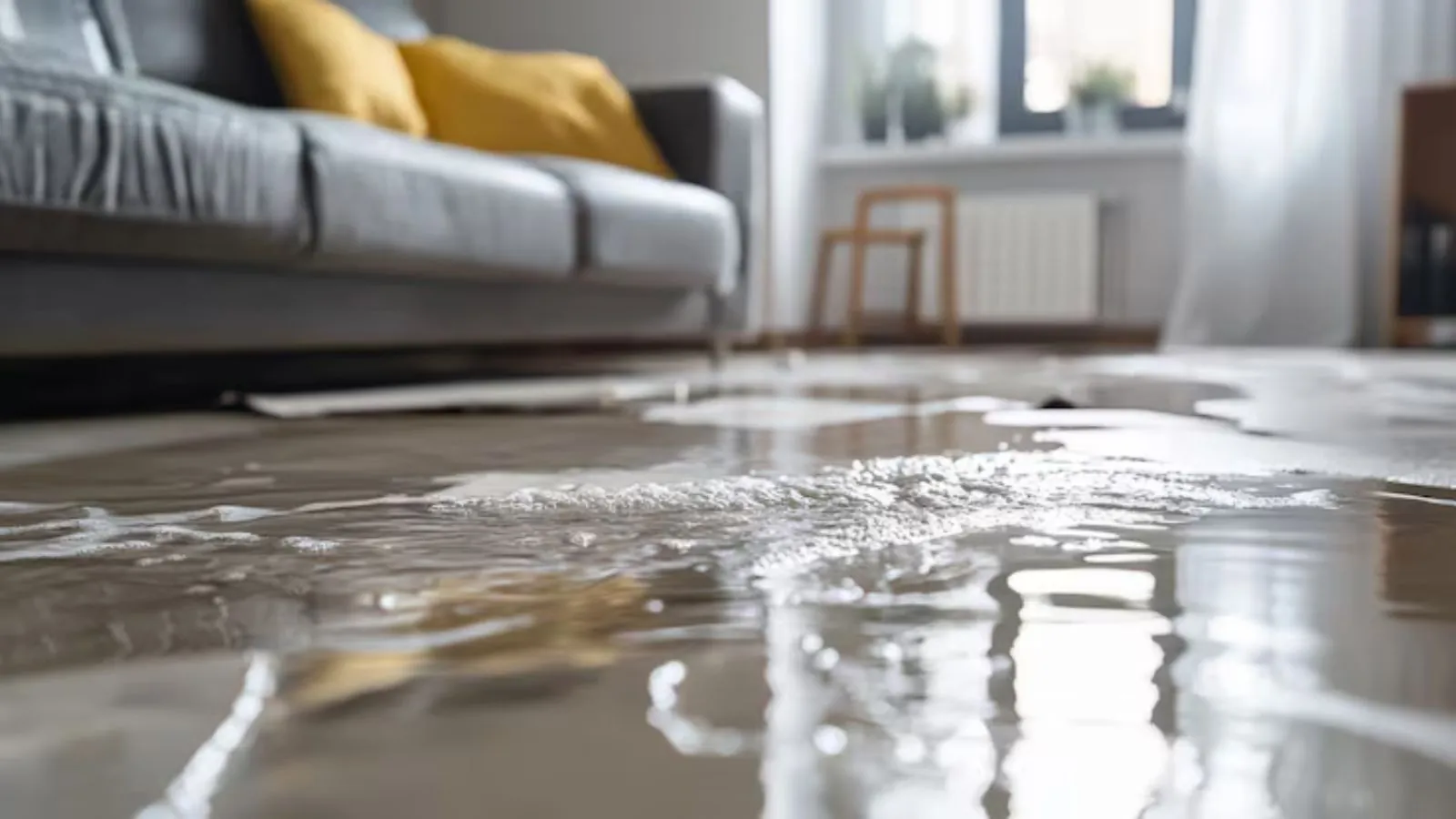
Mitigation and restoration are two different phases
Water mitigation is everything done to stop water damage from getting worse: stopping the source, removing water and drying the structure. Restoration, or repair, is putting the building back afterward. Mitigation is urgent and measured in days. Repair is planned and measured in weeks.
Knowing the stages helps you judge whether a job is being done properly. The published standard for this work is ANSI/IICRC S500, and its logic runs through each step below.
Stage 1: The call and the first instructions
A good first call gathers the source, the rooms affected, the time elapsed and any hazards. You should come away knowing what to do before anyone arrives: close the main valve, stay away from wet electrical items, lift what you can.
Stage 2: Safety and source
On site, the first check is safety. Is the power a risk? Is the ceiling stable? Is the water contaminated? Then the source is confirmed as stopped. Drying a house with an active leak is pointless.
Stage 3: Assessment and moisture mapping
A technician identifies the water category and maps the wet area.
| Category | Meaning | Examples |
|---|---|---|
| 1 | Clean water from a sanitary source | Supply line, water heater, ice maker line |
| 2 | Gray water with some contamination | Dishwasher or washer discharge, sump overflow |
| 3 | Grossly contaminated water | Sewage, outdoor flooding, water that sat for days |
Pin and pinless moisture meters measure walls, floors and framing. A thermal imaging camera finds cool damp areas behind paint. The map shows where water went, which is almost always farther than it looks. The scope and the price should be explained at this point, before work starts.
Stage 4: Extraction
Standing water is removed with pumps and extraction units. This step matters more than people expect. Water removed as a liquid in an hour would take days to evaporate. The method is covered on our water extraction page.
Stage 5: Removal of unsalvageable material
Some materials are taken out because they cannot be dried or cleaned: soaked carpet pad, wet insulation, swollen particleboard and drywall that has lost its strength. With Category 3 water, porous materials it touched are removed. Good mitigation removes what it must and no more.
Stage 6: Drying
Air movers push air across wet surfaces to speed evaporation. LGR dehumidifiers pull that moisture out of the air. Without the dehumidifiers, the water just moves from the floor into the walls and contents.
Hidden spaces get special equipment. Cavity systems blow dry air into walls and under cabinets. Floor mats pull moisture up through hardwood. The equipment is described in more depth on our structural drying page.
Stage 7: Daily monitoring
A technician returns every day, takes readings at the same marked points and adjusts the machines. As areas dry, equipment is removed. A job with no monitoring visits is a job where nobody knows whether drying is working.
Stage 8: Verification and handover
Drying is complete when materials match the dry standard, meaning readings from an unaffected area of the same house. You should get a drying log. Then the repair phase can be scheduled.
How long does it take?
| Situation | Typical drying time |
|---|---|
| Clean water, carpet and drywall, caught on the day it happens | 3 to 5 days |
| Hardwood floors or plaster | 7 to 10 days or more |
| Concrete slab or basement | 5 to 10 days |
| Contaminated water with material removal | Removal first, then 3 to 5 days of drying |
These are ranges, not promises. Readings decide.
Local factors in Gaithersburg
Three things about Gaithersburg affect mitigation. First, the water and sewer utility is WSSC Water. If the source is a main break or a sewer backup from the public line, report it to WSSC's emergency line at 301-206-4002, because your own shutoff will not stop it.
Second, the city sits at the headwaters of Muddy Branch and Seneca Creek, and its engineers reported in 2024 that several streets there flood when storms are intense. Water that enters from the street during rain is handled as Category 3, which changes Stage 5.
Third, mitigation does not need a permit, but the rebuild might. The city's permit list covers jobs like putting a finished basement back or redoing a bathroom or kitchen. Ask the city before the repair phase.
What you can do to help
- Keep the equipment running day and night
- Keep windows and doors closed unless told otherwise
- Leave the thermostat at a normal setting
- Do not move machines or unplug them to use an outlet
- Point out anything you notice, such as a new stain or smell
Signs of a poorly run job
Be cautious if nobody uses a meter, if equipment is dropped off and never checked, if there is no written scope, or if you are told demolition is needed without a reason. Ask to see readings. A competent technician will show you.
Where specific problems are covered
Basements dry on a different schedule because of concrete, as our basement water damage page explains. We serve the city and nearby towns including Derwood and Germantown.
Questions
Who handles a water main break outside my Gaithersburg home?
WSSC Water. Call their emergency number, 301-206-4002. Damage inside your house is then mitigated like any other loss.
Can mitigation start before the insurance adjuster comes?
Generally yes, and policies usually expect you to limit further damage. Photograph everything first and tell your insurer.
Is the noise necessary overnight?
Yes. Stopping the machines at night extends the job and raises the risk of mold.
Does mitigation include repairs?
No. Repairs are a separate phase that follows drying, though one company can scope both.