
The rule that comes before all others
If water is touching, or might be touching, anything electrical, do not walk into it. Standing water can be energized by a submerged outlet, a power strip on the floor or an appliance that is still plugged in. You cannot see it and you will not get a warning.
Everything else in this guide is secondary to that.
When to unplug, and when not to
| Situation | What to do |
|---|---|
| Small spill on a device, floor is dry, your hands are dry | Unplug it at the wall |
| Water dripping onto a device from above, dry floor | Switch off the circuit at the panel, then unplug |
| Water on the floor near outlets or power strips | Do not enter. Switch off the circuit from a dry location |
| Water at or above outlet height | Stay out. Call the electric utility to disconnect power |
| Water near or inside the electrical panel | Do not touch the panel. Call the utility |
| Sparking, buzzing or a burning smell | Leave the house and call 911 |
Reach the panel only if the path to it and the floor in front of it are dry. If the panel is in a wet basement, the utility can cut power at the meter from outside.
Never unplug or switch anything while standing in water, with wet hands or while touching a wet wall or metal pipe.
What water does to electronics
Water itself is only part of the problem. Tap water, and especially dirty water, carries minerals and contaminants that conduct electricity. When a device is powered, that water bridges circuits that should not connect and components burn out.
The second problem is slower. After the water dries, minerals stay behind and corrosion begins on contacts and circuit boards. A device can work for days or weeks and then fail. That is why "it still turns on" is not proof that it is fine.
Device by device
Phones, tablets, laptops. Power off at once. Do not charge. Do not press buttons to test it. Remove the case and any removable battery. Dry the outside and stand it so water can drain. Take it to a repair shop. A bag of rice does very little.
Televisions and desktop computers. Unplug if safe. Do not power on to check. Let a technician open and clean it. The power supply inside can hold a charge even when unplugged.
Kitchen and laundry appliances. If water reached the motor or control board, have the appliance inspected before use. Flood water inside a refrigerator's insulation or a washer's motor usually means replacement.
Furnace, water heater, air handler. Do not relight or restart equipment that was submerged. Have a licensed technician inspect it. Controls, gas valves and burners can be damaged in ways that are not visible.
Outlets, switches and wiring. Any outlet, switch or breaker that was under water should be inspected by a licensed electrician and is commonly replaced. Do not restore power to a flooded area until that is done.
Water coming from above
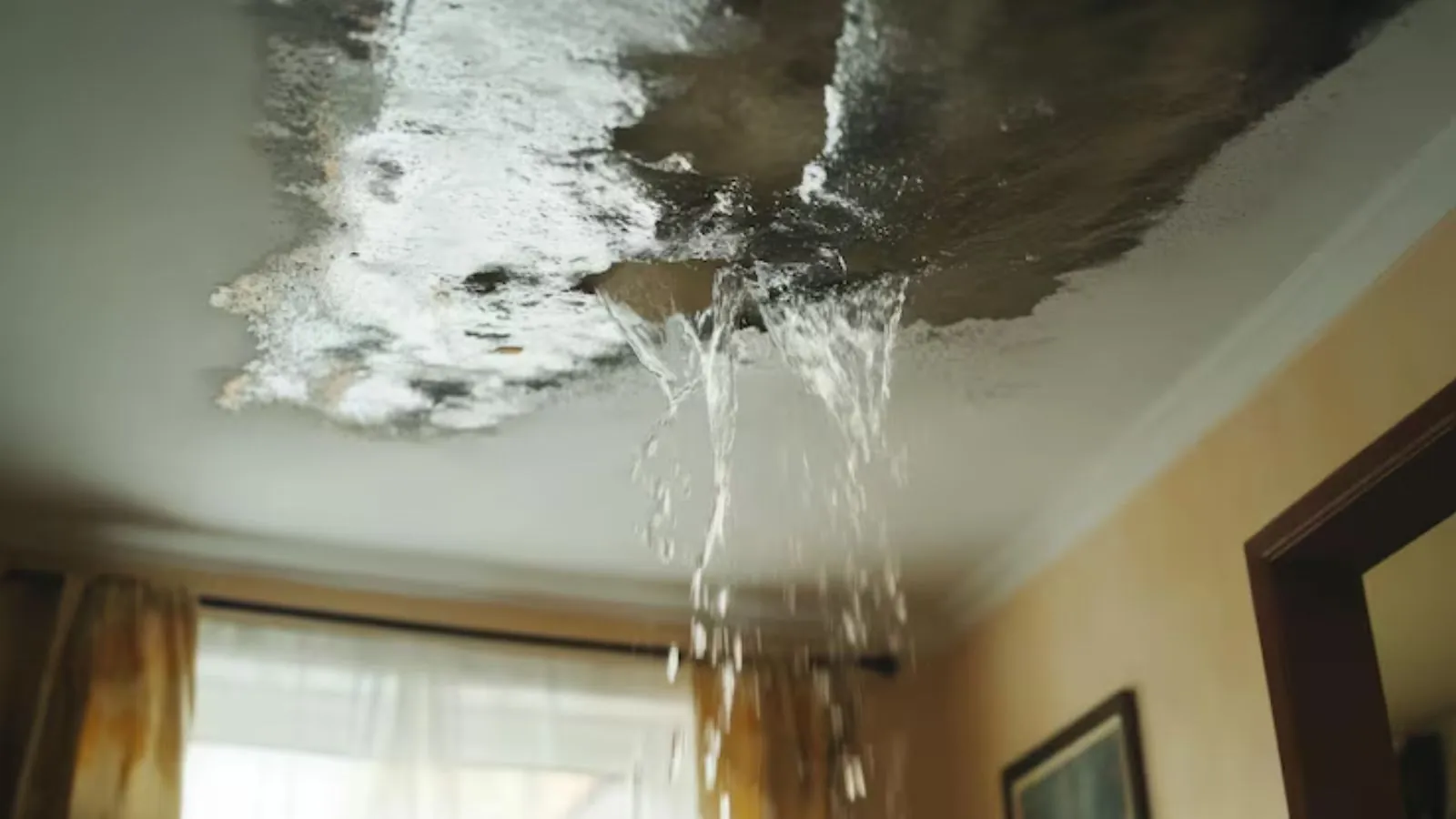
A ceiling leak is an electrical problem as well as a water problem. Water follows wiring and collects in light fixtures and ceiling fans. If water drips from a fixture or the fixture is full of water:
- Do not touch the fixture or its switch.
- Turn off that circuit at the panel if the panel is dry.
- Keep the room clear.
The water side of this is covered on our ceiling water damage page.
Drying equipment and your electrical system
Restoration equipment draws a lot of power. Air movers and dehumidifiers running in several rooms can overload a circuit. A technician spreads the load across circuits and uses ground-fault protected cords. If you set up your own fans after a small leak, plug into a ground-fault outlet and keep cords off wet floors.
Clean water versus contaminated water
Electronics wet by clean tap water have a reasonable chance if they were off or are shut down at once and professionally cleaned. Electronics that sat in sewage or flood water are a different matter. Contamination gets into vents, speakers and fans, and those devices are usually discarded. Our flood damage cleanup page explains how contaminated contents are handled.
Data matters more than hardware
A laptop can be replaced. Its contents may not be. Do not power on a wet computer to rescue files. Drives often survive when the rest of the machine does not, and a data recovery service can read them. Keep the device damp-sealed in a bag and get it to them promptly, since drying in place lets corrosion start.
Local safety contacts and conditions for Gaithersburg
For any immediate electrical danger, sparking or a gas smell, call 911. To have power disconnected at a flooded home, contact your electric utility's emergency line, which is printed on your bill. Do not rely on a restoration company or a neighbor to make an energized basement safe.
Lower levels are the usual trouble spot. Many Gaithersburg homes keep the electrical panel, furnace and water heater in the basement, and a 2024 city drainage report found that certain neighborhoods collect storm water faster than the drains remove it. If your panel is on a level that has taken water before, ask a licensed electrician about your options.
If the rebuild involves new electrical work, permits apply. The City of Gaithersburg handles permitting inside the city limits, and in unincorporated places such as Germantown and Boyds it is Montgomery County's Department of Permitting Services. Your electrician will know which.
For water service problems at the street, WSSC Water's emergency number is 301-206-4002.
After the emergency
Make a list of affected devices with make, model and approximate age, and photograph each one. Insurers usually want that list. Keep the damaged items until your insurer says otherwise. Coverage depends on the cause of the water and on your policy.
When the building itself is wet, drying it is what prevents the next round of damage. Our structural drying page explains how.
Questions
Who do I call to shut off power to a flooded basement in Gaithersburg?
Your electric utility's emergency number, found on your bill, or 911 if there is immediate danger. Do not enter the basement to reach the panel.
My TV got wet but still works. Is it fine?
Not necessarily. Corrosion can cause failure later. Have it checked if it took in more than a splash.
Can outlets be dried and reused?
Outlets and breakers that were submerged should be inspected by an electrician and are commonly replaced.
Does rice dry out a phone?
It has little effect. Power the phone off and take it to a repair shop.