
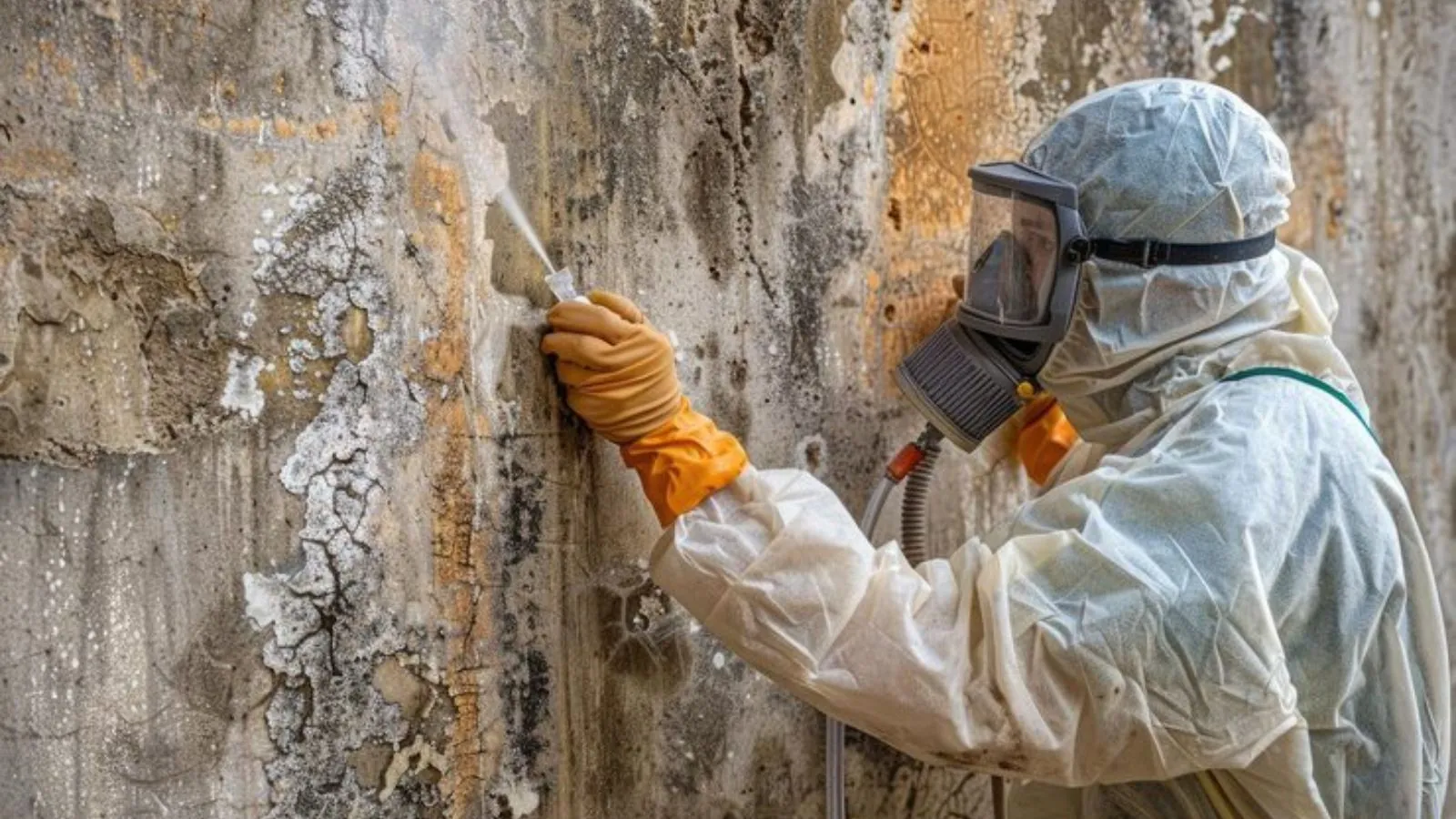
What you are actually paying for
A mold removal service is not selling a chemical. It is selling a controlled process: finding the moisture, isolating the area, removing contaminated material without spreading it and leaving the space clean and dry. If a company's whole pitch is a spray or a fog, that is a warning.
This guide is for homeowners comparing companies. It does not replace an assessment of your house, and it is not health advice. Questions about symptoms belong with a physician.
The standard to ask about
The published standard for professional mold work is ANSI/IICRC S520. You do not need to read it. You only need to ask each company whether its crews work to it, and listen to the answer. A contractor who knows the standard will talk about containment, source removal and moisture correction without prompting.
The parts of a proper job
| Step | What it looks like | Why it matters |
|---|---|---|
| Moisture investigation | Meter readings and a search for the leak | Mold returns if the damp remains |
| Containment | Plastic barriers and a machine exhausting air outside | Keeps spores out of clean rooms |
| Protective gear | Suits, gloves and respirators | Shows the crew takes exposure seriously |
| Removal | Moldy drywall, insulation and carpet bagged and taken out | Growth runs through porous materials |
| Cleaning | HEPA vacuuming and wiping of framing and surfaces | Removes settled spores and residue |
| Drying | Dehumidifiers until materials read dry | Ends the conditions that fed the growth |
| Verification | Visual check and, if wanted, independent testing | Confirms the result |
Questions to ask before you hire
- What caused the moisture, and how will that be fixed?
- How will you contain the work area?
- Which materials will be removed and which cleaned?
- Will you show me moisture readings before and after?
- Do you hold a Maryland Home Improvement Commission license?
- Can I see the scope and the price in writing before work starts?
- Who does the rebuild afterward?
Testing: useful, but know its limits
If you can see mold, a test is not needed to prove it exists. Testing earns its fee when growth is suspected but hidden, when a real estate transaction needs documentation, or after the work to confirm the result.
The important rule is independence. The person who tests should not be the company that profits from the removal. An independent inspector writing the protocol and doing the clearance check removes the conflict of interest.
Red flags
- A quote over the phone without anyone seeing the area
- Pressure to decide immediately
- Talk of health dangers used as a sales tool
- A plan with no containment for anything beyond a small patch
- Painting or sealing over growth without removing it
- A promise that mold will never return
- No interest in where the water came from
Maryland licensing facts for Gaithersburg homeowners
Maryland once had a specific mold remediation licensing law. According to the Maryland Home Improvement Commission's own licensing page, that subtitle was terminated in 2019, and no additional mold license is required today.
What does apply is the general rule. Anyone paid to do home improvement work in the state needs a license from that commission. Removing and replacing drywall, flooring and trim in a house is home improvement work. So ask any mold company working in Gaithersburg for its MHIC license number and look it up on the commission's site.
A rebuild that goes past like-for-like repair can also need city sign-off. Gaithersburg's permit office names remodeled kitchens, remodeled baths and newly finished basements as permitted work.
What a written scope should contain
Before you sign, the document in your hand should name the rooms, state where containment will be built, list each material to be removed with a quantity and say how the area will be dried and checked afterward. It should also say what is excluded, such as fixing the leak itself or repainting. A one-line price for mold treatment tells you nothing about the work, and it gives you nothing to hold the company to if growth returns.
What it costs depends on
Prices vary too much to quote responsibly without seeing the job. The drivers are the square footage affected, how many rooms need containment, how much material comes out, how hard the area is to reach, and how much rebuilding follows. Get a written scope from each company so you are comparing the same work.
How mold jobs usually begin
Most start with water. A toilet seal leaked, an air conditioner drain backed up into a closet, or a basement flooded and was not dried. If your mold followed an event like that in a lower level, our basement water damage page explains the drying side. The service itself is described on our mold remediation page.
We work in Gaithersburg and nearby towns, including Germantown and Damascus.
Questions
Does a mold company need a special license in Gaithersburg, MD?
Not a mold-specific one. Maryland's mold licensing subtitle ended in 2019. The credential to ask for is the company's MHIC number.
Should the same company test and remove?
Independent testing is the better practice, particularly for clearance after the work.
How long does mold removal take?
A single room is often one to three days of removal and cleaning, plus drying time. Larger jobs take longer.
Can I stay in the house?
Often yes, with the work area contained. Ask the company, and ask your physician if anyone in the home has health concerns.