
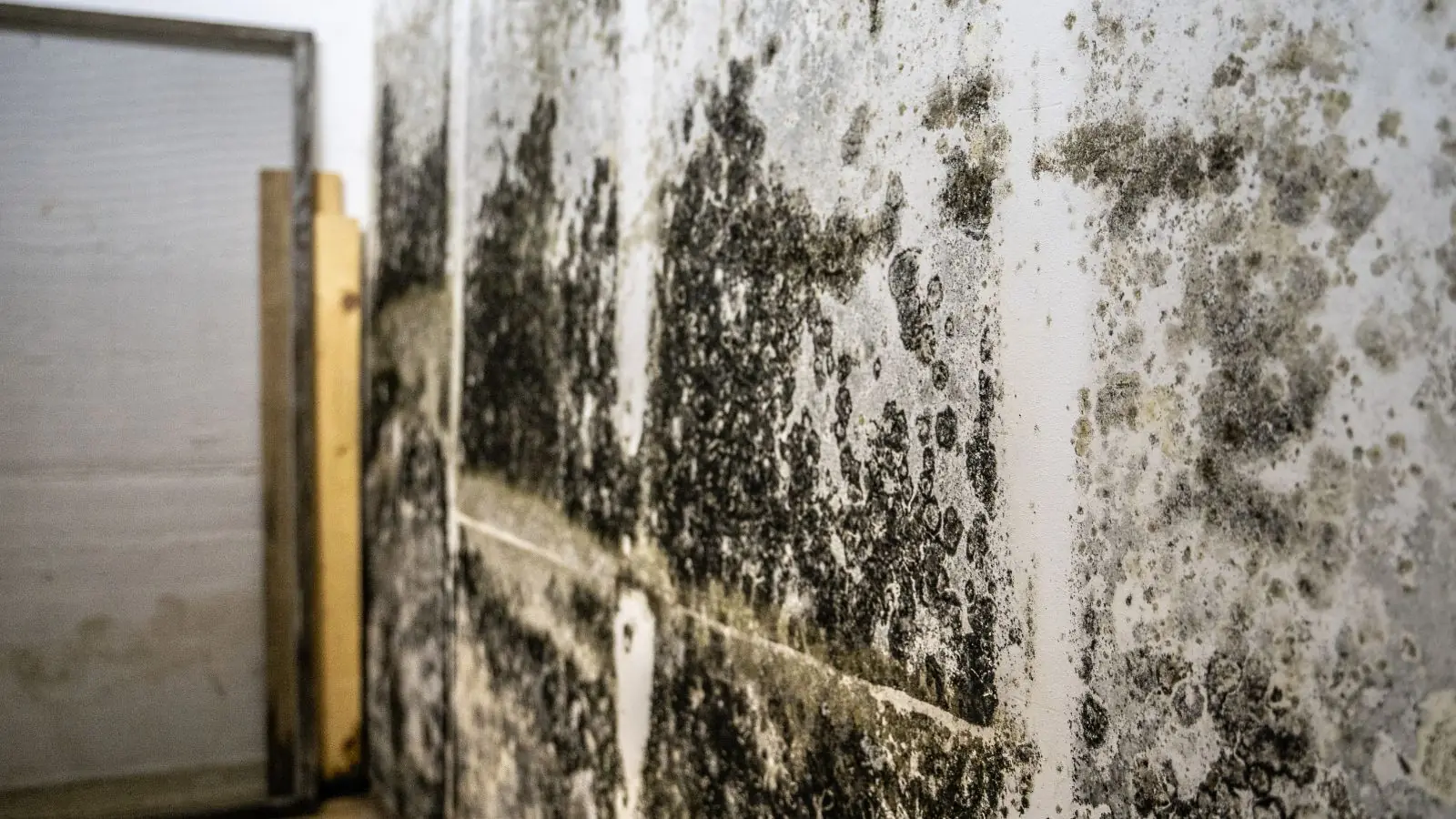
Cleaning mold is about the surface, not the product
Store shelves are full of mold sprays, but the product matters less than the material you are cleaning. Hard surfaces can be scrubbed clean. Porous ones often cannot. This guide goes through the common surfaces in a house.
It applies to small areas only. The EPA's homeowner guidance draws the line at about 10 square feet. Beyond that, or after a flood or sewage backup, get professional help. For health questions, ask a physician.
Safety rules before you start
- Wear an N95 respirator, unvented goggles and long gloves
- Ventilate the room to the outdoors and close it off from the rest of the house
- Never mix bleach with ammonia or other cleaners
- Keep children and pets out until the area is clean and dry
- Stop if the area turns out to be larger than it looked
Method by surface
| Surface | Method | Can it be saved? |
|---|---|---|
| Tile, glass, metal, hard plastic | Scrub with detergent and water, rinse, dry | Yes |
| Grout and caulk | Scrub with a stiff brush. Replace caulk that stays stained | Usually |
| Painted drywall, surface growth only | Wipe gently with a damp detergent cloth, dry fully | If the wall is firm and dry |
| Unpainted or soft drywall | Do not clean. Cut out and replace | No |
| Solid wood, framing, furniture | Scrub with detergent, dry quickly, sand lightly outdoors if stained | Usually |
| Concrete and block | Scrub with detergent and a stiff brush, then dry the room | Yes |
| Carpet and pad | Small spot on carpet may clean. Moldy pad is discarded | Rarely |
| Clothing and washable fabric | Machine wash hot, dry completely | Often |
| Upholstery and mattresses | Difficult. Usually discarded if growth is established | Rarely |
| Books and papers | Dry first, brush outdoors. Valuable items go to a conservator | Sometimes |
| Ceiling tiles and insulation | Replace | No |
The step that people skip
Drying. A cleaned surface that stays damp will grow mold again in days. After cleaning, run a fan and a dehumidifier in the room until everything is dry to a meter or at least dry to the touch for a full day.
Then ask why it was damp. If you cannot answer that, the cleaning is temporary, and the same patch will be back before the season changes.
Finding the moisture
Condensation
Windows, outside corners and uninsulated pipes collect moisture in winter. Improve air movement and reduce indoor humidity.
Poor ventilation
Bathrooms and laundry rooms need a working exhaust fan that vents outdoors.
A leak
Stains with a defined edge, or mold in one spot only, usually mean plumbing or roof water.
Ground moisture
Musty basements and crawl spaces need dehumidification and often drainage improvements.
A humidity gauge costs very little. Indoor relative humidity kept below about 50 percent makes mold growth much less likely, which is in line with EPA guidance.
Gaithersburg conditions to keep in mind
Central Maryland summers are humid, so basements in Gaithersburg often need a dehumidifier running from late spring to early fall even with no leak at all. If yours smells musty every summer and dries out in winter, humidity is the likely cause, not plumbing.
The city sits at the headwaters of Muddy Branch and Seneca Creek. When the city surveyed residents for a drainage study finished in 2024, people described water running across their yards and pooling in streets. If your lower level gets damp after heavy rain, the moisture is coming from outside, and cleaning alone will not hold.
If cleaning turns into removing drywall, hire someone with a current MHIC number, since the state licenses that kind of repair work through its Home Improvement Commission. The commission also confirms that the state's separate mold remediation license ended in 2019.
What not to use
Do not use a household vacuum on mold. Without HEPA filtration it blows spores back into the room. Do not use a pressure washer indoors. Do not rely on paint with a mildew additive to fix an active problem. It is meant for clean surfaces.
Ozone generators are sometimes sold for mold. The EPA does not recommend them for occupied spaces.
When cleaning is the wrong answer
Cleaning is wrong when the material is porous and the growth is established, when the area is large, when the mold came from contaminated water, or when it is inside a wall or ceiling. Those cases need removal under containment.
If mold followed a leak that soaked a wall, the wall repair is covered on our wall and drywall page. If carpet is involved, see carpet water damage. The professional process is on the mold remediation page.
We serve Gaithersburg and nearby towns including Boyds and Germantown.
Questions
Why does my Gaithersburg basement get moldy every summer?
Usually humidity. Warm humid air meets cool basement surfaces and condenses. A dehumidifier set to about 50 percent often solves it. Dampness after rain points to water entry instead.
Is vinegar better than bleach?
Both are used by homeowners on hard surfaces. Neither fixes porous materials. Do not mix them with each other or with other cleaners.
How do I know the mold is gone?
The surface is visibly clean, there is no musty smell and it stays that way for weeks. Recurrence means moisture remains.
Can I clean mold off carpet?
A small surface spot, sometimes. If the backing or pad is moldy, replace it.